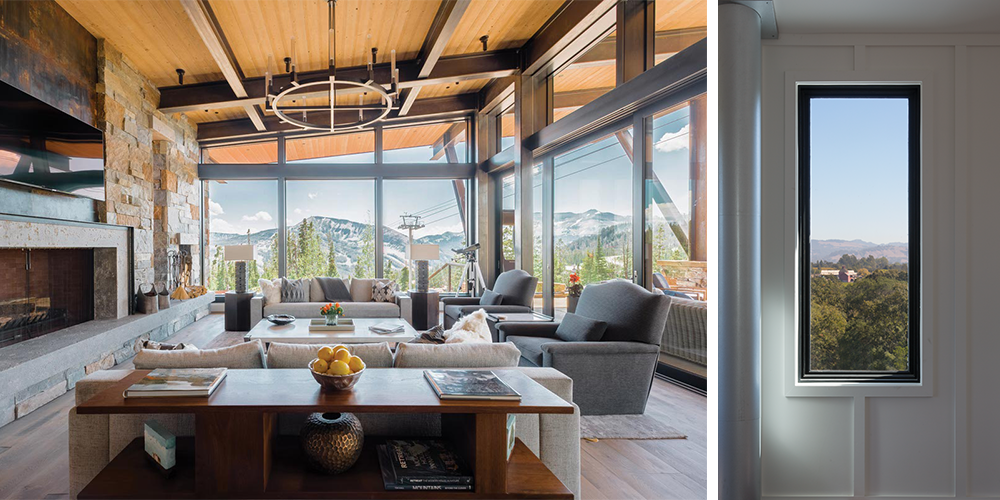
Size--like shape or color--is a fundamental element of fenestration design. Scale and proportion help articulate the intended concept of our architectural designs.
While trends gravitate toward maximized sizes, “go big or go home” is not a universal principle. Just as a spectacular entryway door can convey a sense of grandeur, so too can a small, perfectly positioned window curate an idyllic, focused view.
[Source] [Source]
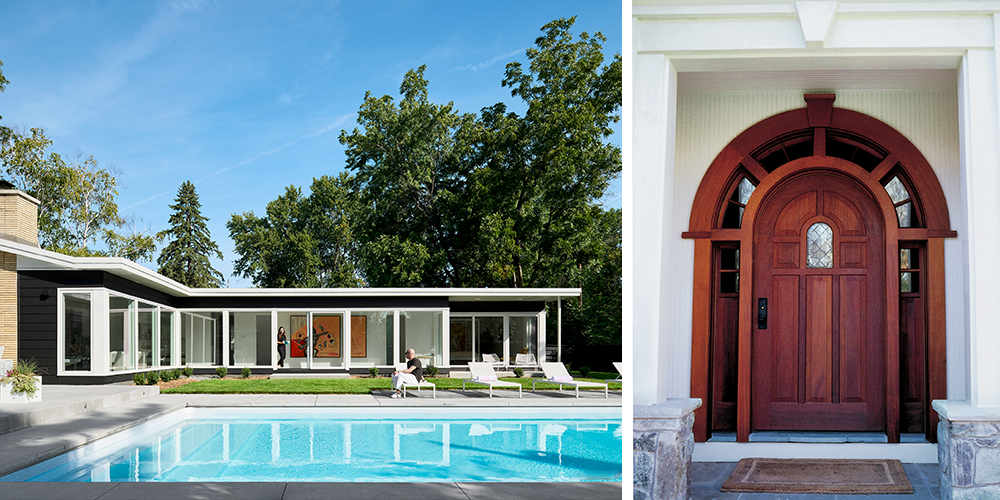
When different window and door sizes are paired in relationship to one another, the overall appearance suggests an intentional approach to the whole. They offer a glimpse into the heart of a home’s design and interior details, while strengthening a connection with the surrounding landscape.
Homes are first and foremost for people. They should be personalized to suit their owners and occupants. The biggest doors and smallest windows also should be scaled for people’s benefit and intuitive and effective use.
Typically, doors in residential entryways span 36 by 80 inches depending on their intended functionality and location. While these dimensions accommodate most people, including those who use wheelchairs and mobility devices, larger sizes may be more comfortable for a broad range of people and their accessibility needs.
[Source] [Source]
Window sizes are more varied than doors. For windows that open and close, ease of use and accessibility should be basic considerations for their practical operation. The sash should move smoothly and with minimal effort. The hardware should be within reach and simple to use. Reliable operation is critical where windows serve an emergency egress function, and larger sizes also may be a wise choice for this purpose.
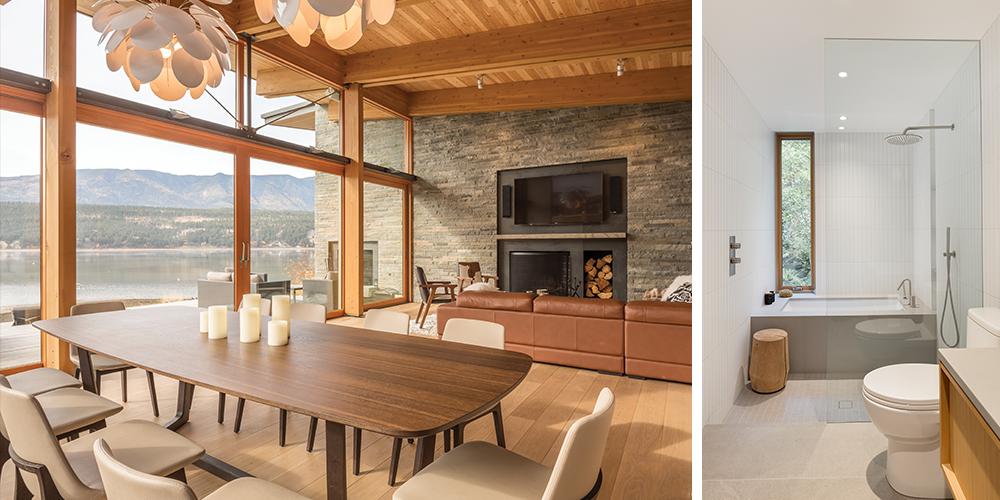
Homes also have rooms to serve specific functions. Accordingly, windows and doors should be sized to enhance their functionality. Larger windows and doors usually appoint the common spaces like living rooms and kitchens. Sometimes called “public” areas, it is generally assumed that these rooms may be viewed from outside. For those inside, bigger windows and doors present the opportunity for more natural light, air circulation and special views. In a home’s private areas--like bedrooms and bathrooms--smaller windows and doors contribute to personal privacy while retaining individual control of natural light and air circulation.
[Source][Source]
Operable windows and sliding doors can be scaled to suit personal spaces or wherever smaller, more selective openings are preferred. Here are several common examples.
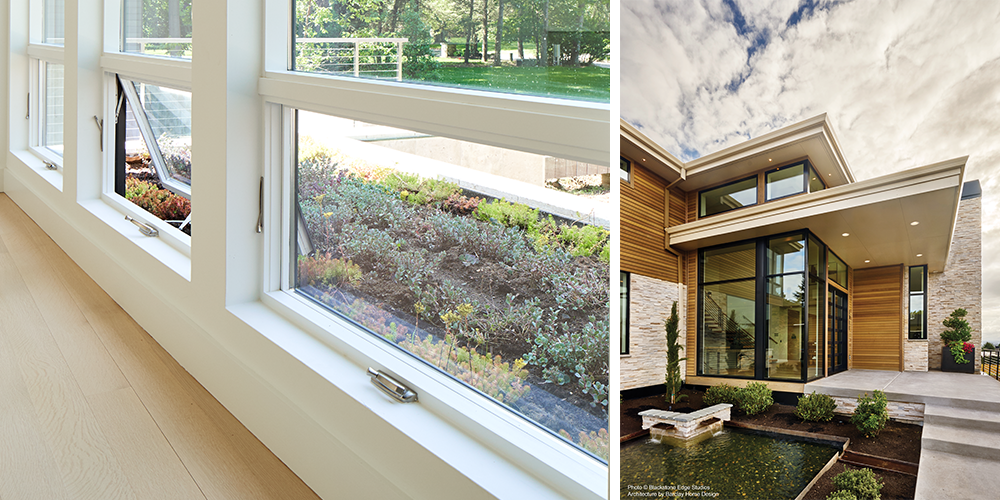
Some of the best windows for small spaces are awning and hopper windows. Awnings are hinged at the top and usually project outward, while hoppers are hinged at the bottom and usually project inward. Both window types primarily provide natural ventilation and light. Minimizing weather intrusions, awnings also may remain open during light rain.
[Left Source]
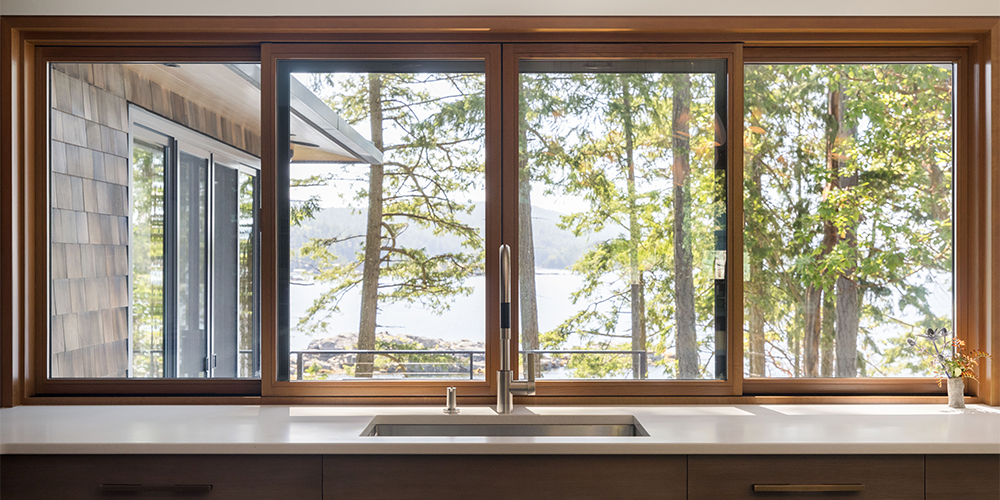
Hung and sliding windows have a sash that operates within the frame. The sash in a hung window travels vertically and, in a sliding window, it moves horizontally. Double hung windows have a top sash that can move downward and a bottom sash that can move upward. The combined sash operation optimizes positioning for air circulation and ventilation.
[Source]
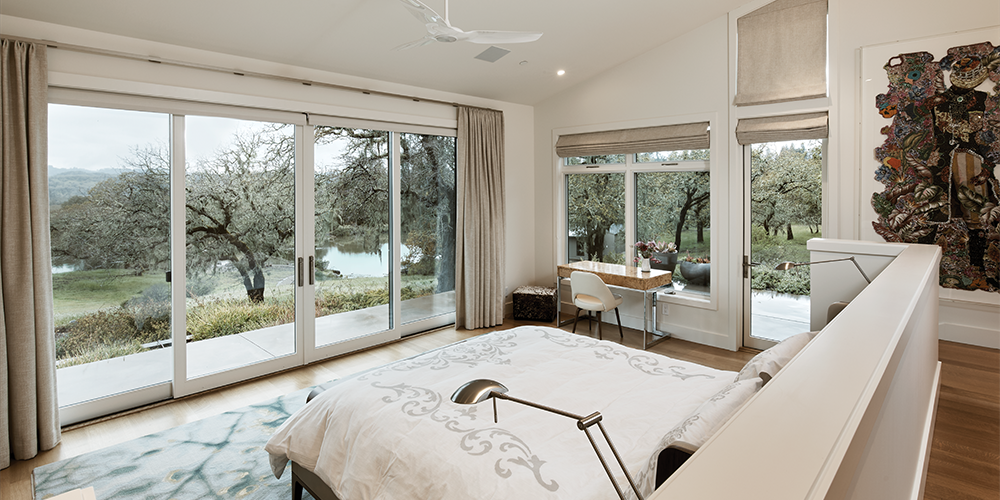
Like sliding windows, sliding doors have a panel that moves horizontally within the frame, making them among the best doors for small spaces. Several panels can be added to sliding doors to expand their size and scale. To further utilize limited space, sliding doors can be designed with panels that stack or pocket into a wall.
[Source]
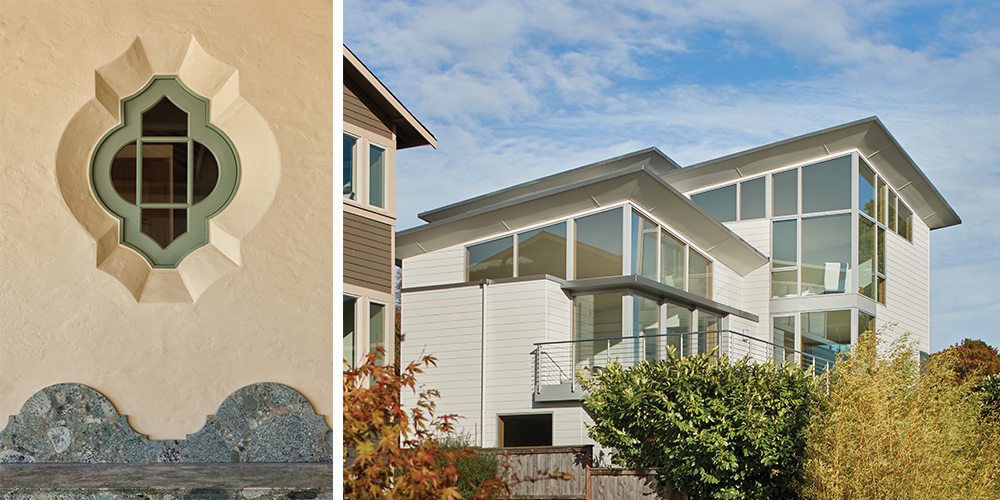
Geometric windows add a focal point to a room and accentuate specific views. A unique shape can create an opening where a traditional rectilinear window may not fit. Specialty framing, muntin grids or operation can further emphasize the distinct look of these openings. Not limited to small sizes, geometric window designs can scale to generous proportions.
[Source] [Source]
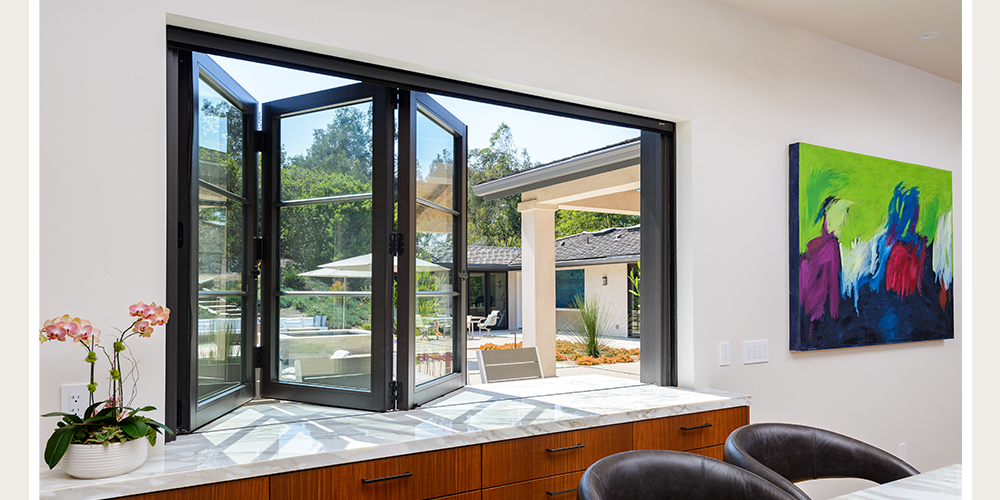
For larger rooms and more dramatic openings, making a statement may involve one grand unit or several in an expansive combination. Folding windows and doors operate by shifting their sashes or panels to one or both sides of an opening. The biggest folding windows and doors maximize views, add pass-through functionality and create circulation while aligning with the architectural style. Lift & Slide doors also can incorporate numerous grand panels for large, clear openings.
[Source]
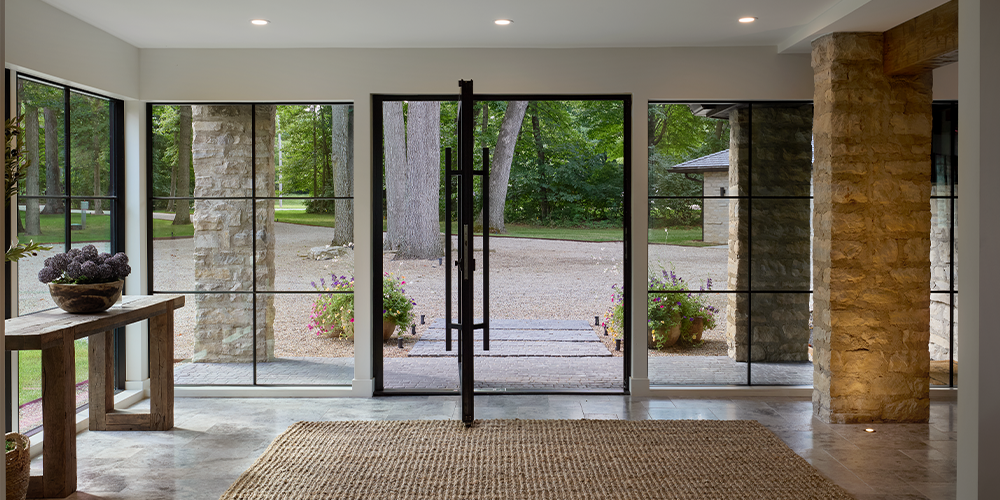
Pivot doors, usually reserved for entrances, can also command attention with towering panels. These doors open widely by operating on pins above and below the panel rather than using a typical hinge on the side of the frame.
[Source]
Sliding doors and windows can be scaled up in size with complex engineering and unique hardware, facilitating their ease of operation while retaining exceptional performance. Kolbe’s new VistaLuxe WD LINE Stretta sliding door features immense panels with maximum panel widths up to 118" and heights up to 141", that operate with a featherlight touch and seal on all four sides when closed.
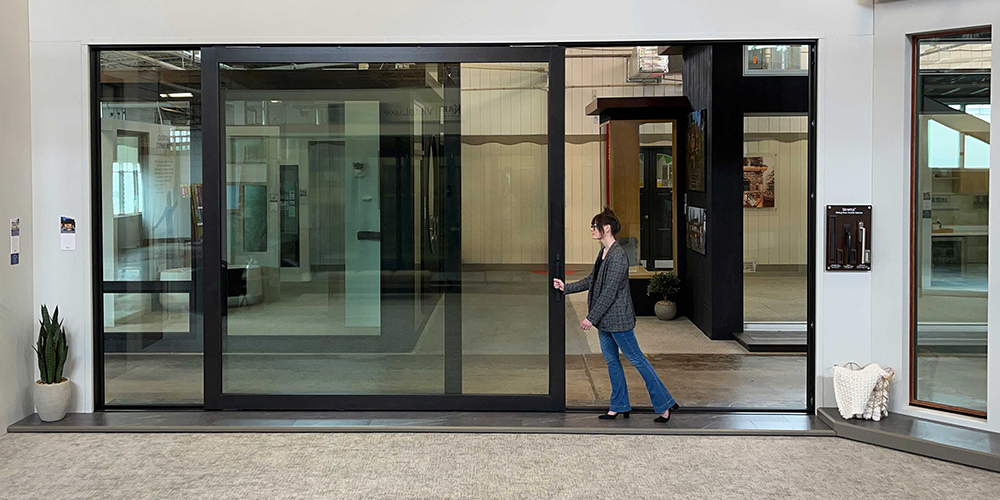
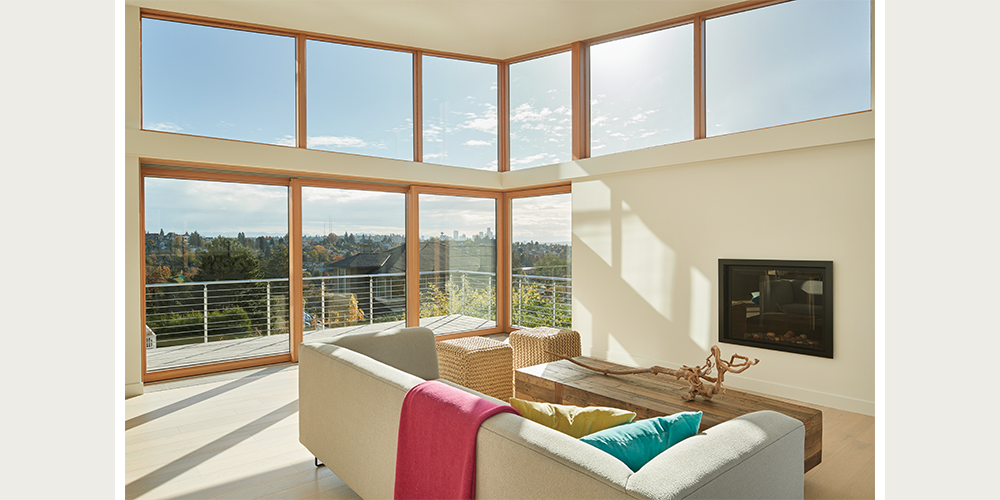
For ultimate ventilation, these doors can be topped or flanked with operable windows. When additional fresh air isn’t necessary, adjacent direct set windows can deliver tremendous daylight openings with uninterrupted views. Because they are stationary, no additional hardware is required, and glass sizes can fill the entire frame. Further, custom direct set windows can be precisely crafted for geometric designs. Direct sets often make up corner windows, too, and can be paired with corner doors.
[Source]
The scale and proportion of a window or door further inform us of the functionality of a space and reveal the intended, overall design. The following examples highlight these ideas.
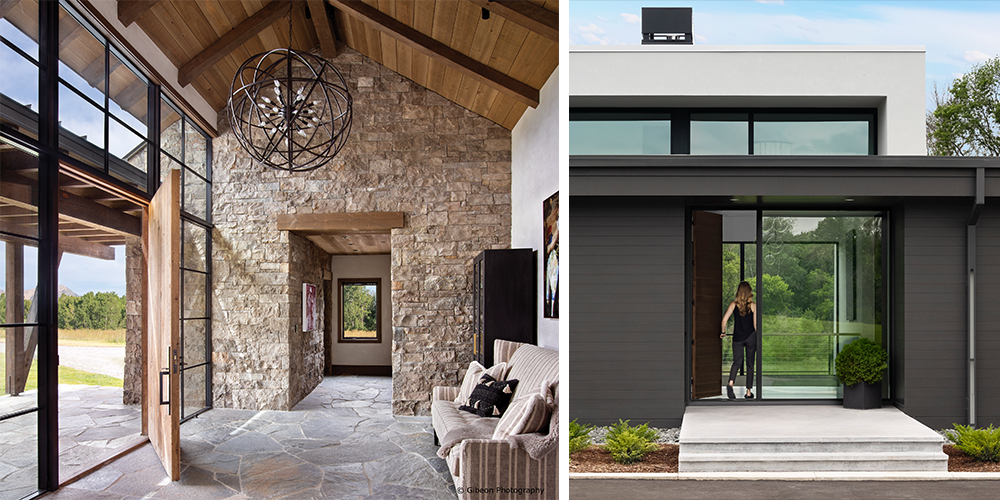
A massive entrance door or a front door with a tall transom above it could indicate such assumptions as:
- Well-lit common spaces and circulation areas are emphasized
- Exciting or important views are positioned near the front
- Vaulted or extra-tall ceilings may be found inside
- Adjacent walls and elevations may feature more selective daylight openings
 [Source][Source]
A small but detailed geometric direct set window would match design goals that include:
- Fostering a reverent, calm space, where natural ventilation is unnecessary, like a library or study
- Creating a private, personalized, quiet space to concentrate or create, such as an office, craft area or meditation and yoga room
- Embodying an elegant, customized approach to framing a highly specific view
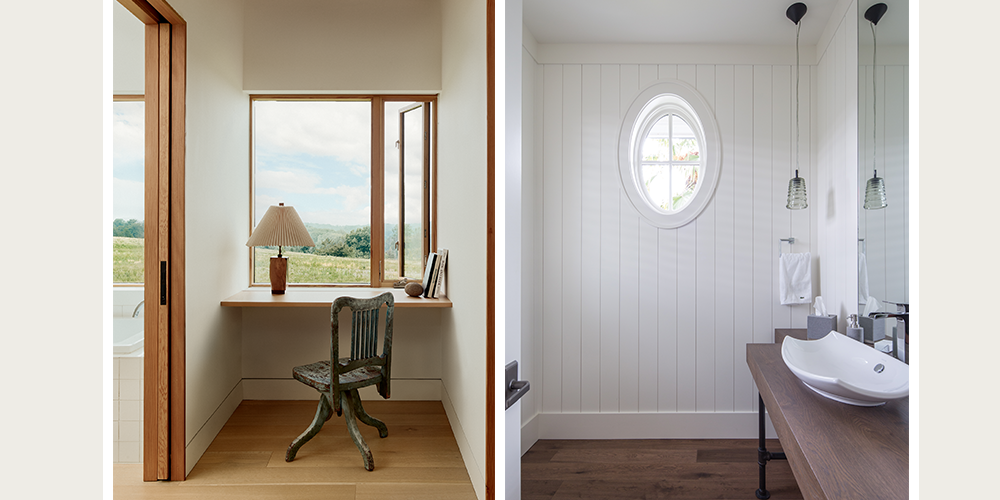
[Source][Source]
A mixture of large and small openings configured in proximity may be confusing at first, but they promote a thoughtful relationship with the home’s surroundings. These arrangements may be accomplished in several ways, such as:
- A series of smaller casement windows around a larger direct set, achieving both uninterrupted views and plentiful air circulation
- Smaller direct set windows around a grand opening like a sliding or folding door, leveraging the look of a full window-wall
- A smaller sliding door near larger window types, dissolving the boundary between indoor and outdoor spaces
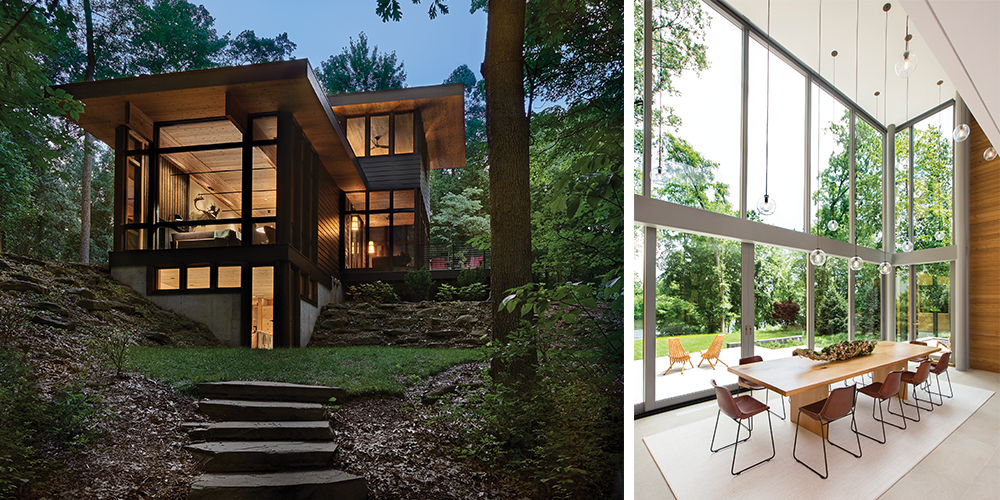
[Source][Source]
In conjunction with purposeful sizing, distinctive details of the doors and windows support a holistic design, inside and out. Consider the following:
- Proportionally scaled divided lites and muntin grids
- Glass colors and patterns
- Frame profiles and finishes
- Unified or diverse operation methods and hardware types
- Matching or staggered sight lines
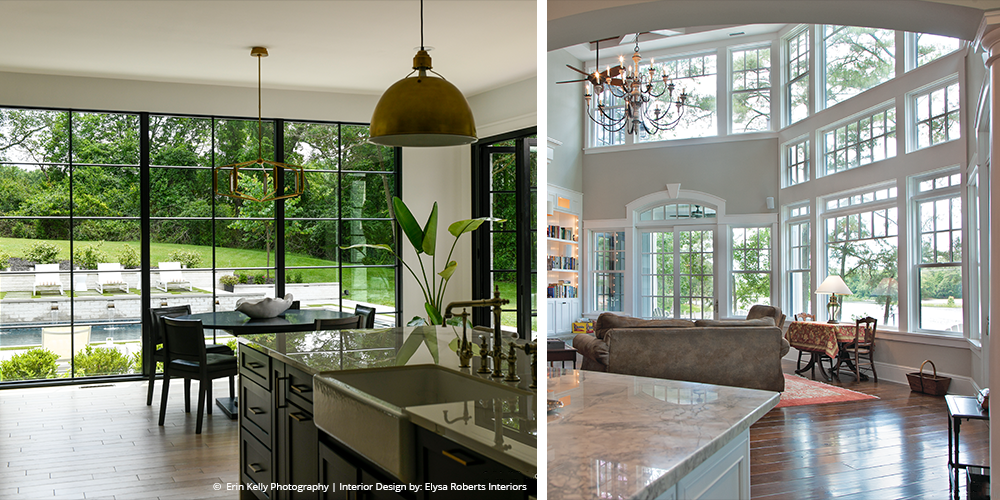 [Right Source]
Designing with size is only one part of the equation. Nearly every element of a window or door can be customized to present a harmonious appearance across the whole home. Window and door manufacturers like Kolbe help you infuse craftsmanship at every level, guiding you toward your most effective solution.